Guide

Remote Site & Last-Mile Delivery

SCS delivers units to sites that sit well beyond the sealed-road network: remote mine sites, oilfields, Pacific Islands, off-grid camps and defence locations. We get them there by combining sea freight with barge, heavy-haul road and last-mile coordination, and we engineer each module to survive that journey.

Summary

SCS delivers to remote mine sites, oilfields, islands, off-grid and defence locations by combining sea freight with a barge final leg, heavy-haul road and last-mile coordination. Remote delivery is engineered in at the design stage, not improvised at the freight stage: the lifting, securing and offload features are designed in with the module, so the unit is built for the chain it travels. This guide sits alongside our global shipping pages at SCS Global, covering the product specifications and compliance documentation that support the same procurement audience.

01

Where the road ends

Delivering where the sealed road ends

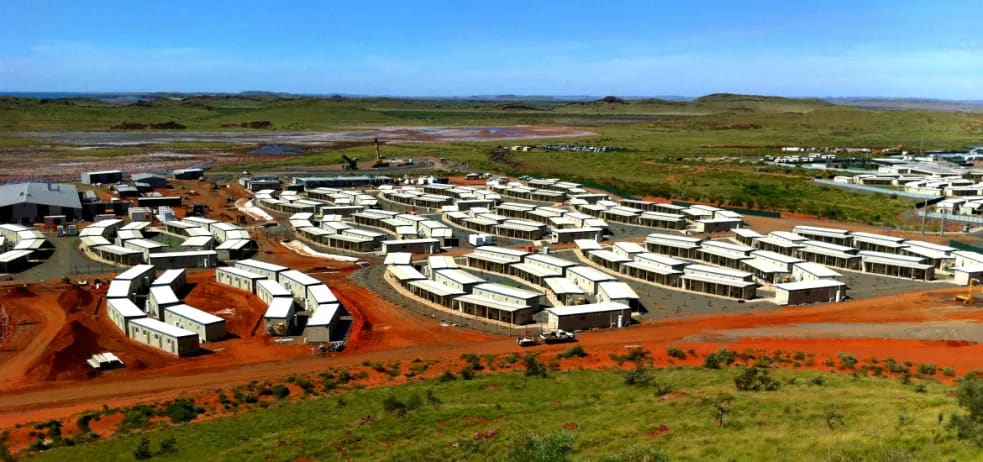
Plenty of project sites cannot take a standard truck off a sealed highway, let alone a container vessel alongside. The honest scope matters here: SCS is the manufacturer that builds the units and coordinates their delivery, working with specialist barge and heavy-haulage operators on the legs that need them, rather than running an owned fleet. What we control is the part that decides whether a remote delivery succeeds, which is how the module is built. Because the lifting, securing and offload features are designed in with the module, the unit is built for the chain it will travel, from vessel to barge to low-loader to the final tow onto a pad. That lets us serve remote mining camp accommodation and oilfield projects a delivery contractor handed a finished box could not.

Sites we deliver to. We deliver to remote and island locations, shallow ports, defence locations, off-grid sites and remote mine sites. Each profile is matched to the right chain at quote stage: deep-water port to road, shallow port to barge to road, or port to heavy-haul to a mine-site haul road. The destination sets the method, including offshore and oilfield units bound for hard-to-reach coastal and island sites.
02

Barge

Barge and remote-port delivery

Many remote and island destinations have no deep-water berth and no crane infrastructure, so a standard container vessel cannot service them directly. Barge solves that. Units are transhipped to a barge for the final water leg and landed at a shallow port, a beach or a remote jetty, then transferred to road haulage for the run inland. This mixed mode, sea freight to barge to road, is how we reach sites that look undeliverable on a shipping schedule. The barge leg is governed by the local port or marine authority at the destination, and we coordinate it as part of the delivery plan. The freight methods behind the sea leg are set out on our shipping methods page.

Without large port cranes. Where there is no yard crane at the landing point, the module's own lifting features do the work. Integrated lifting lugs let a mobile crane or HIAB-equipped truck offload the unit at the shore or pad, so the delivery does not depend on fixed port infrastructure.

03

Heavy-haul road

Heavy-haul road and the highway leg

Once units are ashore, the highway leg carries over-dimensional or over-mass modules on a prime-mover with a low-loader, drop-deck or extendable trailer. These moves run under an oversize permit regime. In Australia, the National Heavy Vehicle Regulator oversize/overmass (OSOM) scheme requires a permit for over-dimensional or over-mass moves unless a gazette notice already covers the vehicle, and it regulates heavy vehicles above 4.5 tonnes gross. Above set thresholds, the load needs pilot and escort vehicles. In Western Australia, a load wider than 5.5 m or longer than 40 m needs a Traffic Escort Warden and a Heavy Vehicle Pilot Licence, and WA and the Northern Territory run their schemes separately from the national regulator. International destinations follow their own local equivalents of the same regime.

Oversize permits, pilots and escorts. The permit and escort set is matched to the load and the route. A standard-dimension move may run on a gazette notice, while an over-width or over-length module needs a project permit and one or more pilots or escorts. SCS coordinates this with the haulage operator, so the permit, route and escort arrangements are in place before the unit leaves the port.

04

Last mile

Last-mile to off-road sites

The final leg often leaves the sealed network entirely. The module is floated from the highway trailer onto a site low-loader or skid and moved along unsealed or mine haul roads, towed where needed by a dozer or prime mover. Before any of this is committed, a route survey checks the constraints that stop a heavy load: bridge and culvert limits, overhead clearance, pavement load rating, turning radii and gradient on the final climb. The survey turns a remote address into a planned delivery, done before dispatch so the trailer, offload method and permits match what the route can take.

Route survey before dispatch. The survey output drives the equipment choice. A low bridge rating or a tight turning radius can change the trailer type, the axle configuration or even the module's split into separate transportable sections. Getting this right before the unit ships beats discovering a clearance problem with a loaded low-loader stopped on a haul road.

05

Engineered for the journey

Engineered to survive the journey

This is the part only the manufacturer can deliver. Because we design the transport features when we design the module, every oversized unit carries integrated lifting lugs, a reinforced frame and engineered tie-down points, so it survives multi-modal handling, vessel to barge to low-loader to dozer-tow, without twisting or damage. Our bolt-together modular construction lets a large structure travel as separate transportable modules and assemble on site, which keeps each piece within transport limits. A delivery contractor inherits whatever box it is handed, and we build the box for the journey, in our own factory. The same engineering shows up in our delivered projects.

Self-offload at sites with no crane. The lifting lugs are rated and positioned so the module can be lifted cleanly by a mobile crane or HIAB at the destination. That removes the dependency on a fixed crane a remote site will not have, so a unit can land at a beach, a jetty or a prepared pad and still come off the trailer safely.

06

At a glance

Remote-delivery capability at a glance

The table below summarises the chain SCS coordinates to reach a genuinely remote site, from the barge water leg to the last-mile tow, with the engineered features that make each step possible.

SCS remote-site and last-mile delivery capability
CapabilityDetail
Barge and remote-port deliveryDirect delivery to shallow ports, Pacific Islands, remote mine sites, defence and off-grid locations, landing without large port cranes
Destination types servedRemote and island locations, shallow ports, defence, off-grid sites, remote mine sites
Engineered self-offloadIntegrated lifting lugs and tie-down points let units be offloaded with a mobile crane, a HIAB or their own lugs where there is no yard crane
Heavy-haul roadOver-dimensional or over-mass modules on prime-mover and low-loader, drop-deck or extendable trailer, under oversize permits with pilot or escort where required
Last-mile to off-road sitesTransfer from highway trailer to off-road haulage on unsealed or haul roads, floated onto a site low-loader or towed by dozer or prime mover
Route surveyBridge limits, overhead clearance, pavement load rating, turning radii and gradient assessed before dispatch
Mixed modeSea freight, then a barge final water leg, then road haulage from the barge landing

Standards & references

Regulations behind the road legs

The over-dimensional road moves on this page run under an oversize/overmass permit regime. The Australian scheme below is the worked example; international destinations follow their own local equivalents.

NHVR OSOM National Heavy Vehicle Regulator oversize/overmass scheme, the permit, pilot and escort regime for over-dimensional and over-mass road moves in Australia. NHVR

Expert perspective

The part only the manufacturer can deliver

“A delivery contractor inherits whatever box it is handed and has to make it fit the journey. We do the reverse: we know the chain a unit will travel before we cut steel, so the lifting lugs, the reinforced frame and the tie-down points are designed for vessel-to-barge-to-low-loader-to-dozer handling from the start. The route survey then matches the trailer and permits to what the road can take. Get both right and a remote delivery becomes a planned sequence rather than a series of problems solved on a haul road with a loaded trailer stopped.”

Managing Director Adam Baker

Next step

Talk to us about your remote site

Tell us where the site is and how remote, and we will plan the chain to reach it, then return a delivery plan you can take to procurement.