
DNV Offshore & Marine Equipment
DNV Offshore Containers – Certified Offshore & Marine Equipment Manufacturer
SCS Global manufactures the full range of DNV offshore containers factory-direct from our Jiangsu facility: DNV 2.7-1 and 2.7-2 certified cargo containers, workshops, baskets, mud skips, ATEX modules, skids, and accommodation modules. Every unit ships crane-rated for dynamic offshore lifting and coated for continuous saltwater exposure. We're a manufacturer, not a reseller or hire company.
Complete Range
The Complete DNV Offshore Range
Every unit in the offshore range, engineered and certified at our Jiangsu factory before it leaves the yard. The grid below covers DNV 2.7-1 and 2.7-2 cargo containers, workshops, baskets, mud skips, ATEX hazardous area modules, engineered skids, and living quarters: the DNV containers and rig container formats offshore projects specify most, plus the standards guide procurement teams use to specify correctly.
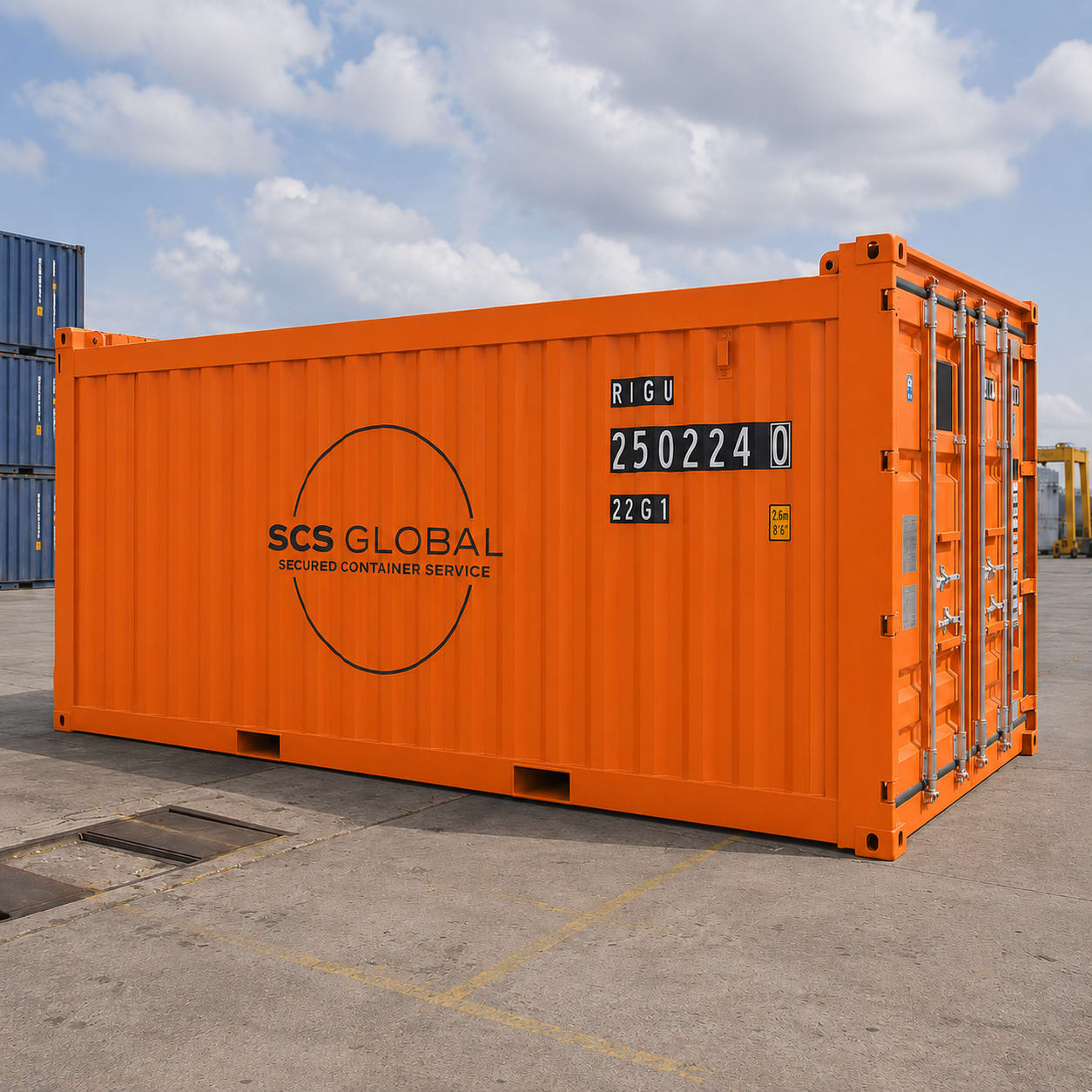
DNV Cargo Containers
DNV 2.7-1 and 2.7-2 certified offshore cargo carrying units in 10ft, 20ft, and half-height, built for crane lifting on platforms and supply vessels.
dnv 2.7-1 cargo containers
Offshore Workshops
DNV 2.7-1 and 2.7-2 workshop containers for maintenance, shutdowns, and MWD work, with ATEX Zone 1/2 options.
offshore workshop containers
Offshore Baskets
Open-top crane-rated cargo baskets, personnel transfer baskets, and subsea baskets certified to DNV 2.7-1, EN 12079, and ISO 10855.
offshore baskets and personnel transfer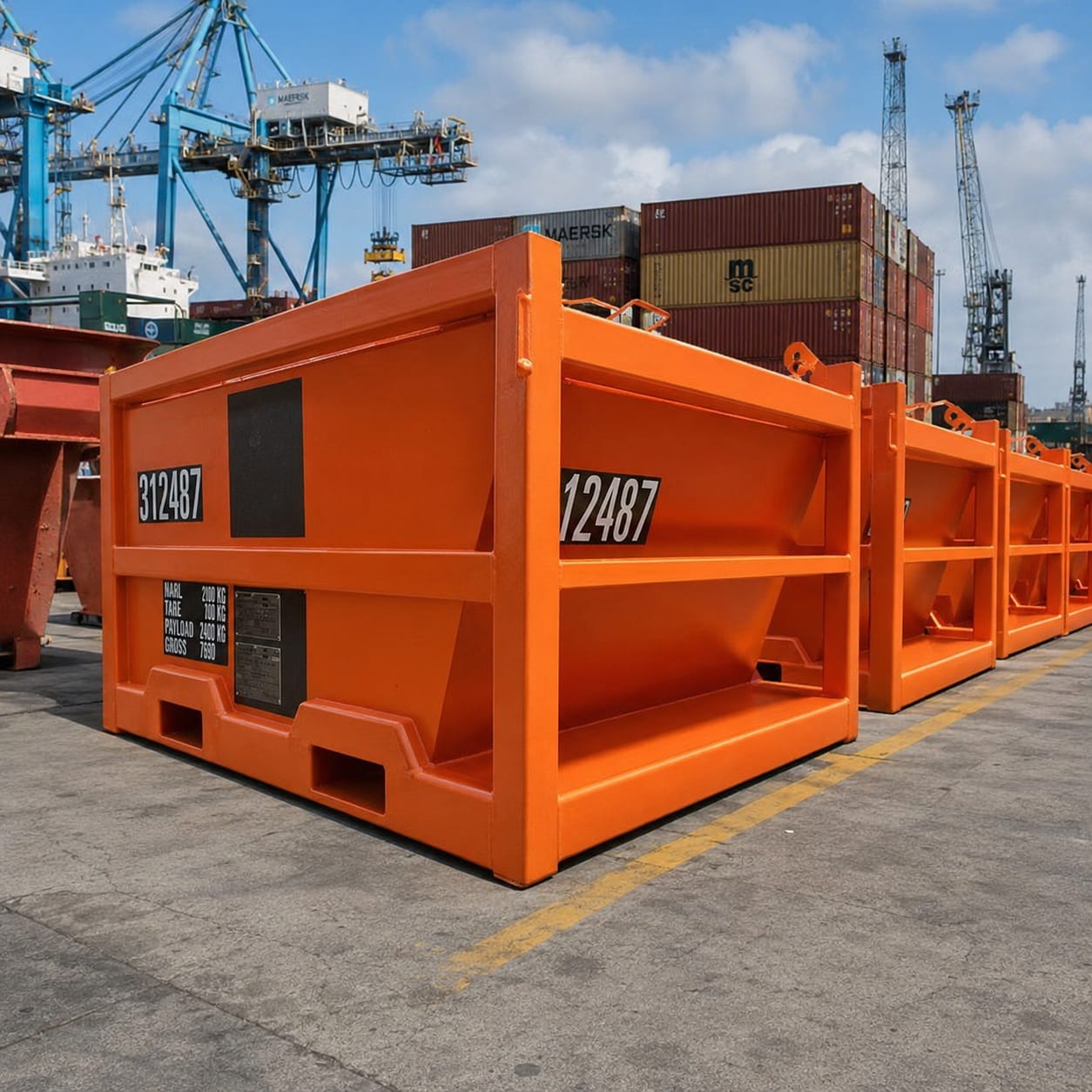
Mud Skip Containers
Sealed, leak-proof drill cuttings and waste skips certified to DNV 2.7-1 with MARPOL Annex V compliant containment.
mud skip containers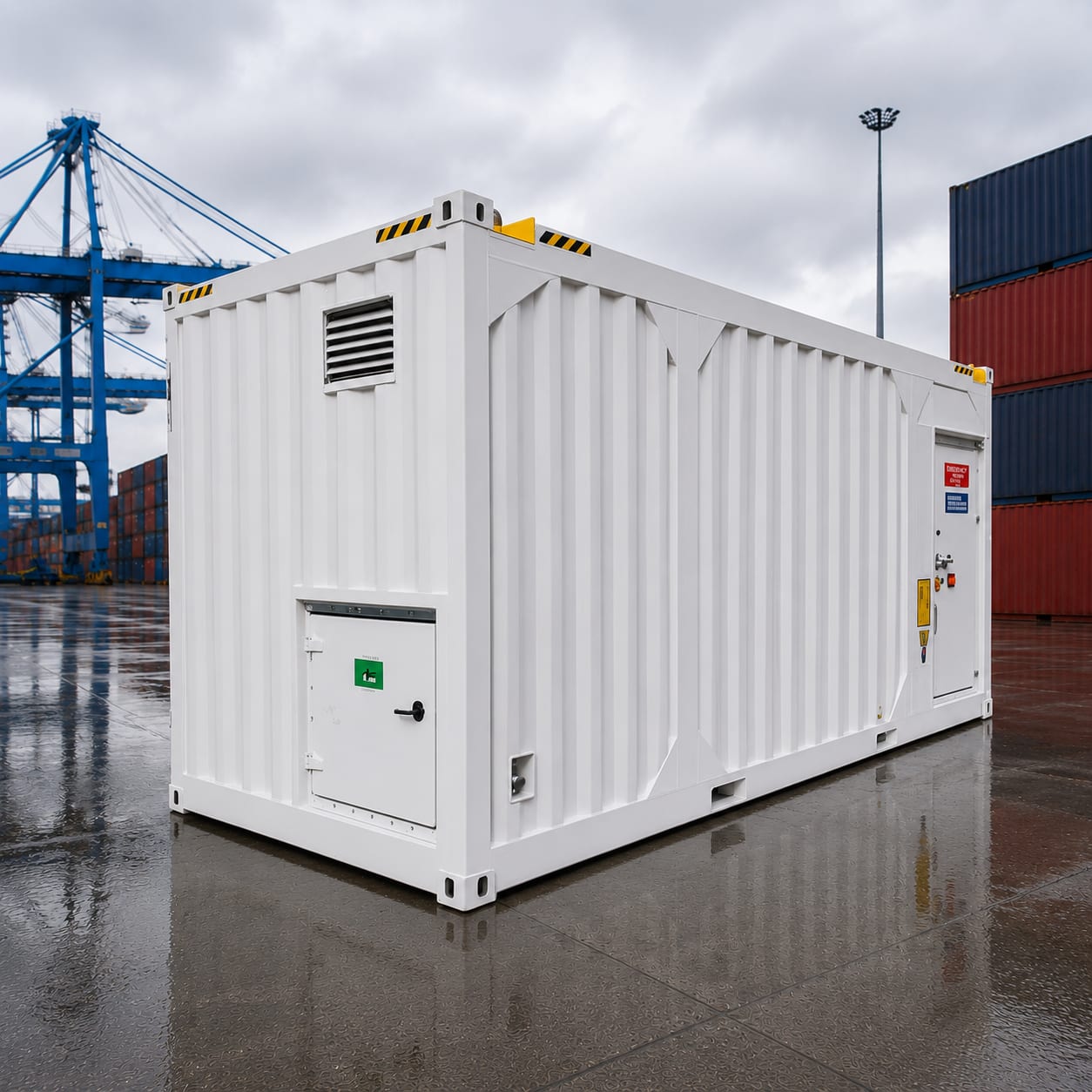
Hazardous Area Modules
ATEX and IECEx Zone 1/2 modules with A60 fire-rated boundaries, blast resistance, and pressurisation for explosive atmospheres.
atex hazardous area modules
Skids & Engineered Frames
Open structural frames for mounting pumps, compressors, generators, and tanks, certified to DNV 2.7-1, EN 12079, and ISO 10855.
offshore skids and engineered frames
Offshore Living Quarters
DNV 2.7-1/2.7-2/2.7-3 accommodation modules for 1 to 8 personnel, A60 fire-rated, stackable to four floors.
offshore living quarters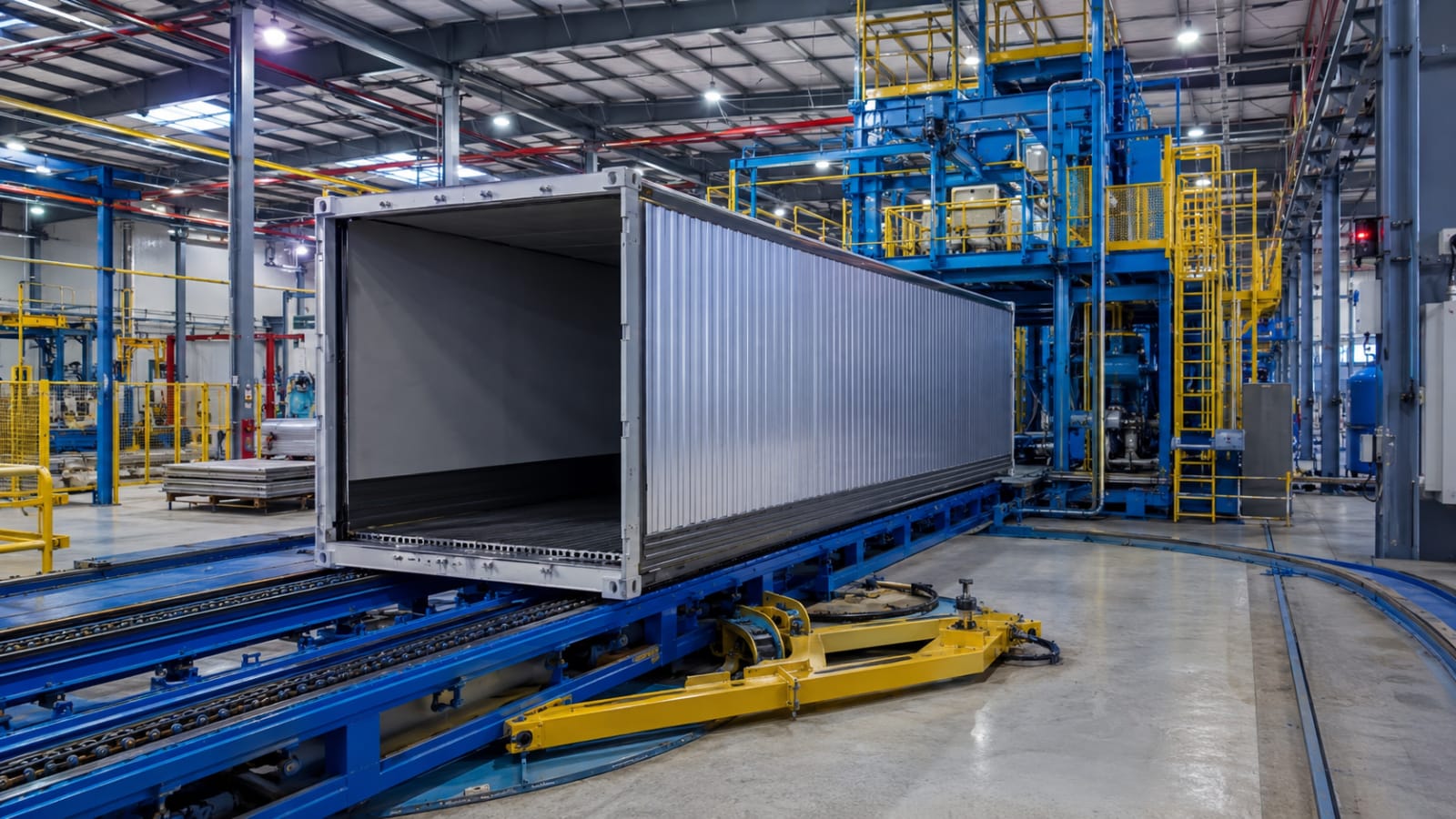
Offshore Container Standards Guide
Reference guide to DNV 2.7-1, 2.7-2, 2.7-3, EN 12079, ISO 10855, CSC, and A60 fire ratings.
offshore container standards guide Cargo Carrying Units
DNV 2.7-1 & 2.7-2 Offshore Cargo Containers
SCS manufactures DNV 2.7-1 and 2.7-2 certified offshore cargo containers in 10ft, 20ft, and half-height, built for crane lifting on platforms, FPSOs, and supply vessels. A cargo carrying unit (CCU) is a certified offshore freight container engineered for crane transfer at sea: unlike static-stacking ISO boxes, it carries a crash frame and certified pad-eyes for four-leg sling lifting. MGW runs from 11,500 kg (10ft) to 20,000 kg (half-height) in Q345/S355 steel with marine coating. Type approval is available from DNV, LR, BV, or ABS.
Deck Equipment & Lifting Gear
Lifting, Handling & Structural Support
Beyond enclosed cargo containers, every offshore campaign needs lifting gear, waste handling, and structural frames. SCS builds the deck-equipment range on the same DNV testing regime: crane-rated baskets for personnel and cargo, sealed mud skips for drilling waste, and engineered skids for mounting pumps, compressors, and process equipment.
Offshore Baskets
Open-top crane-rated cargo baskets, personnel transfer baskets, and subsea baskets certified to DNV 2.7-1, EN 12079, and ISO 10855.
offshore baskets and personnel transfer Mud Skip Containers
Sealed, leak-proof drill cuttings and waste skips certified to DNV 2.7-1 with MARPOL Annex V compliant containment.
mud skip containers Skids & Engineered Frames
Open structural frames for mounting pumps, compressors, generators, and tanks, certified to DNV 2.7-1, EN 12079, and ISO 10855.
offshore skids and engineered frames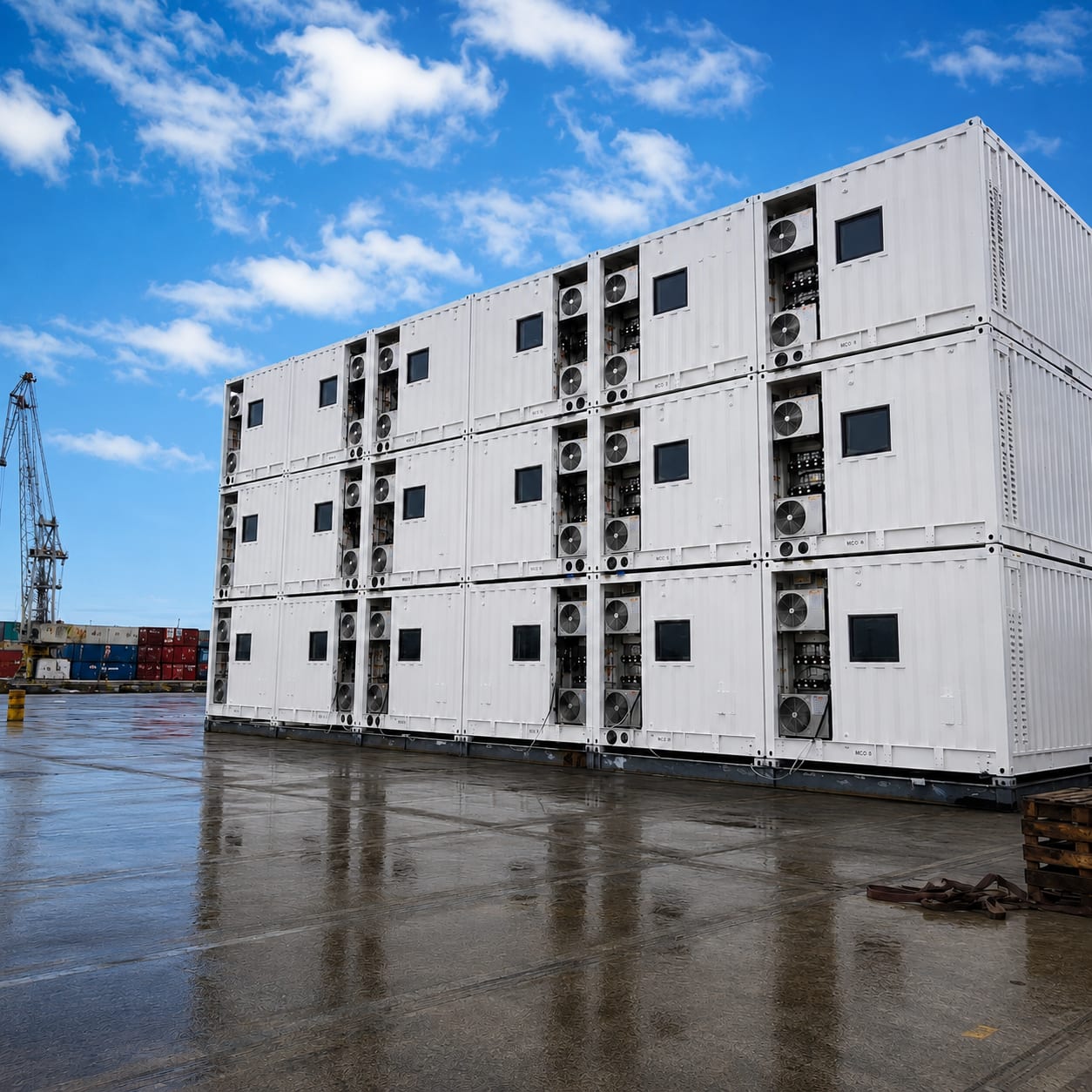
Accommodation
Offshore Living Quarters & Accommodation Modules
Offshore living quarters are DNV certified modular accommodation modules housing 1 to 8 personnel per unit, stackable up to four floors for larger camps. Modules come in 20ft, 32ft, and 33ft sizes, certified to DNV 2.7-1, 2.7-2, and 2.7-3 plus SOLAS Chapter II-2 and NORSOK C-001/C-002. Each is built with A60 fire-rated boundaries, individual air conditioning per bedroom, and wet units, with linking kits for connected blocks. Rig accommodation to 2.7-3 covers oversized units beyond the 25,000 kg envelope of 2.7-1.
Proof of Work
Recent offshore equipment deployments
Three representative offshore deployments across the North Sea, the Arabian Gulf, and offshore West Africa. Every unit shipped factory-direct with stamped QA documentation and classification-society certification.
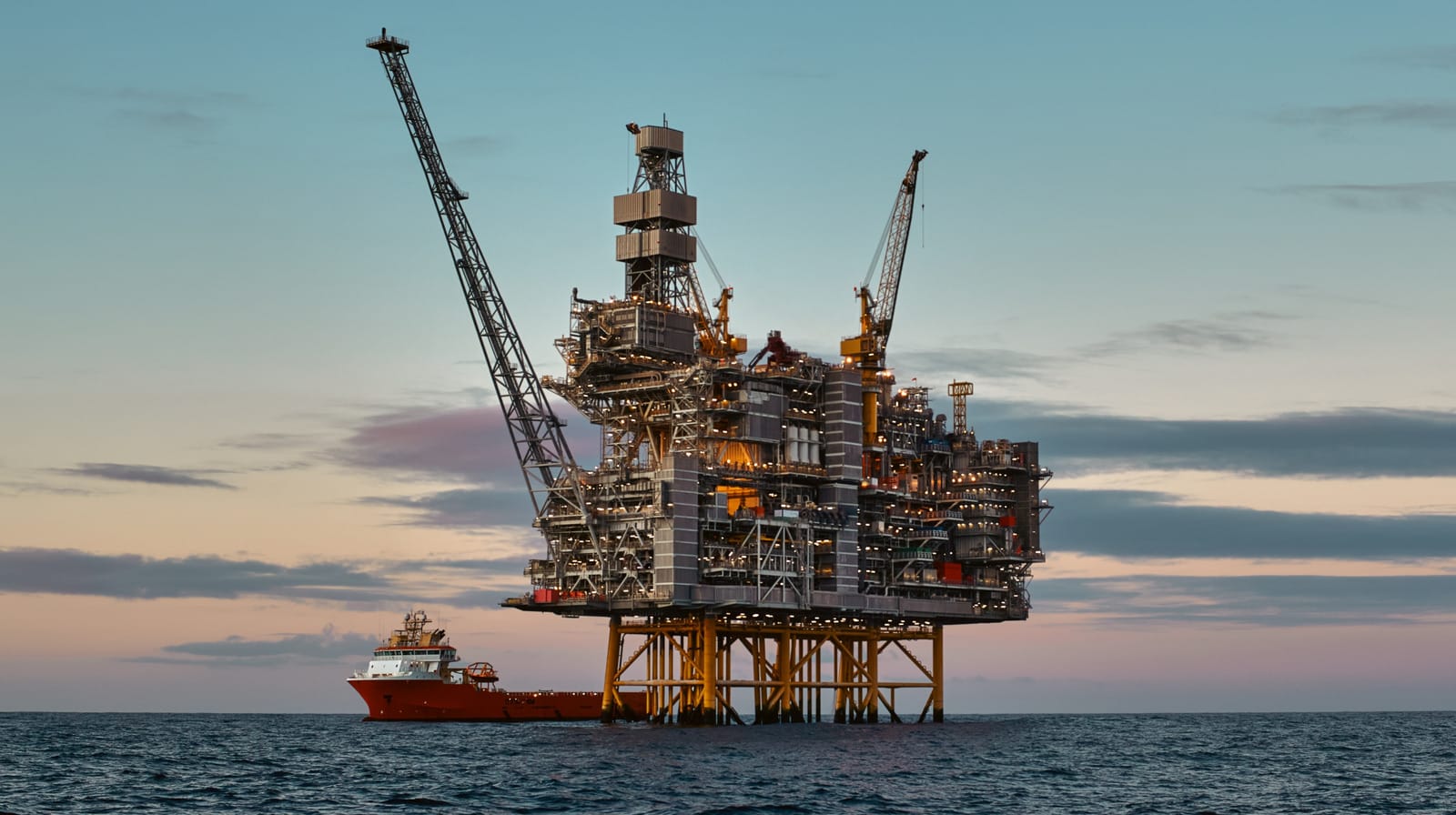
North Sea Offshore Module, DNV 2.7-1
A DNV 2.7-1 / EN 12079 offshore workshop and lab module with an ATEX zone-rated fit-out and A60 envelope, passed factory acceptance test on the first cycle for a North Sea operator.
View project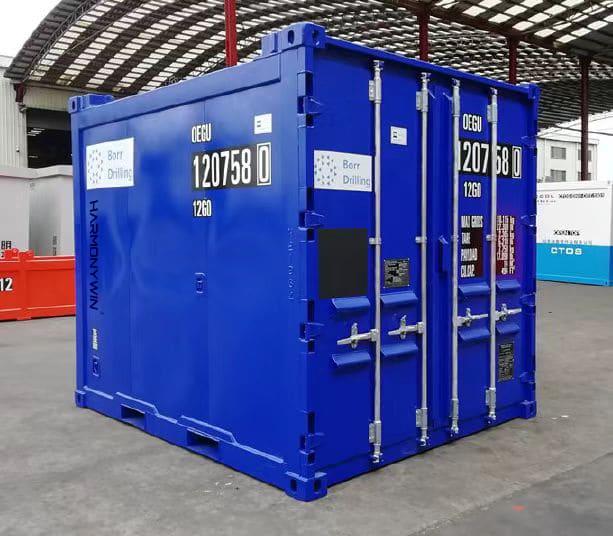
Gulf Drilling Campaign, DNV 2.7-1 Modules
DNV 2.7-1 living quarters and workshop modules for a Gulf drilling campaign, engineered for a 50 degree ambient and a C5-M corrosion category, delivered to the rig-up window.
View project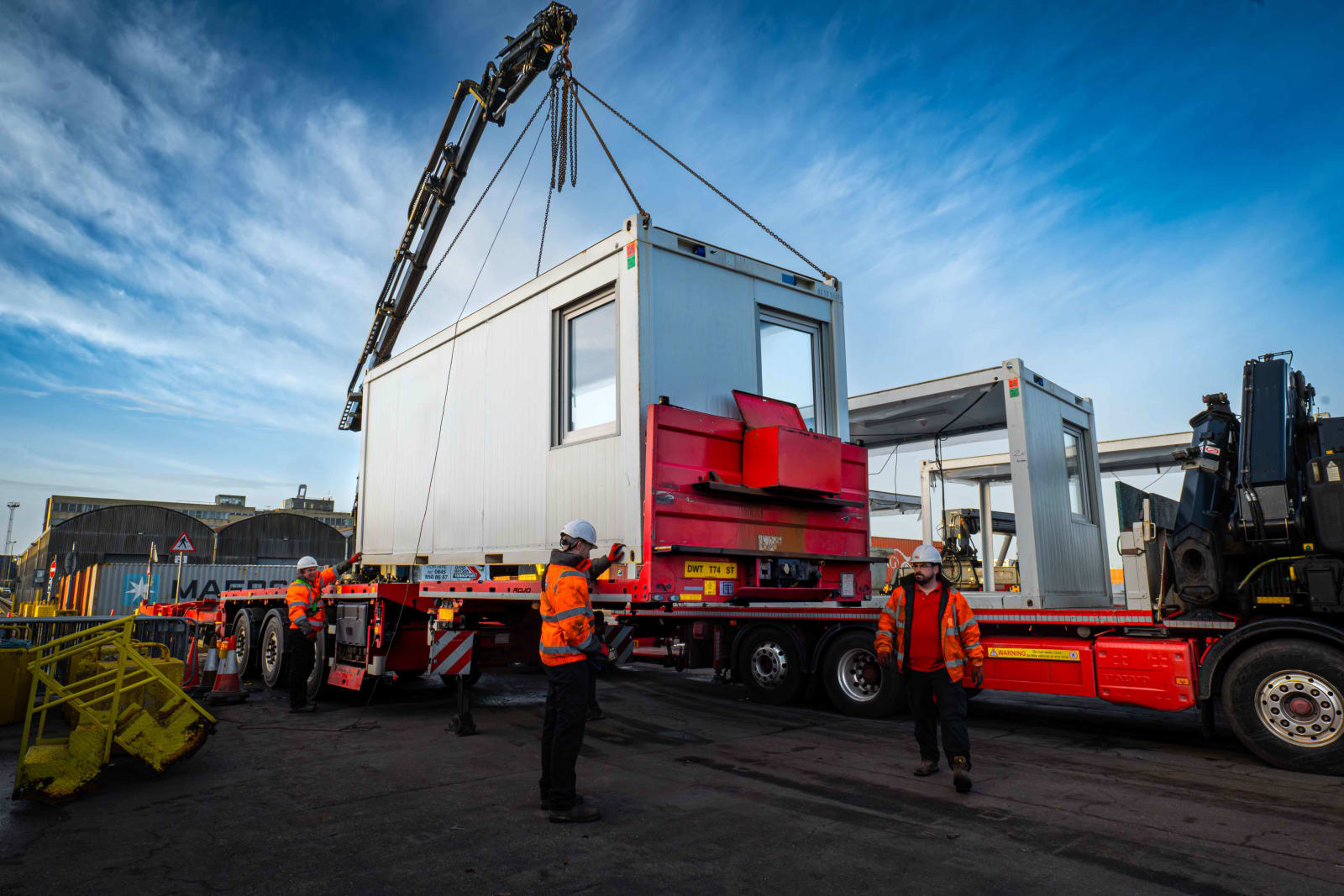
West Africa FPSO Support, DNV Baskets and Skids
A full offshore handling set of DNV 2.7-1 / 2.7-3 baskets, mud skips, and cargo skids for an FPSO support contract, proof-load tested and shipped in one consolidated movement.
View projectFactory-Direct
Why Choose SCS Global for DNV Offshore Equipment
SCS Global is a factory-direct offshore container manufacturer, building DNV offshore equipment from our own Jiangsu facility with full engineering documentation, material traceability, and third-party inspection to your chosen classification society. Procurement teams specifying DNV containers get factory pricing without a reseller margin, and the choice of certification body sits with the buyer: DNV, BV, ABS, LR type approval, SGS, or Intertek.
Documentation integrity
Every unit ships with mill certificates for all structural steel, qualified welding procedures (WPS and PQR), and MPI or NDT on critical structural welds. Load testing is a proof load at 2.0 times Safe Working Load per DNV 2.7-1, with dry film thickness checks on the coating and a pre-shipment inspection report with photographs before the unit leaves the factory.
One manufacturer, the full range
The same factory and quality system supports oil and gas operations, marine construction, and mining and resources projects where crane-rated containerised equipment is specified. Cargo containers, workshops, baskets, skips, ATEX modules, skids, and accommodation all come off one line, against one engineering baseline.
Global Delivery
Worldwide Shipping from the Factory
Typical lead times
Factory → site, door-to-door in weeks
| Destination | Factory → Site |
|---|---|
| Middle East / Gulf | 8–12 weeks |
| South East Asia | 8–12 weeks |
| Australia / NW Shelf | 10–14 weeks |
| West Africa | 12–16 weeks |
| North Sea / Europe | 10–14 weeks |
SCS ships DNV offshore containers worldwide from our Jiangsu factory, managed from Hong Kong, with factory-to-port logistics covering the Middle East, South East Asia, Australasia, West Africa, and the North Sea.
Factory-to-port logistics
Each unit loads into standard shipping slots, or ships as deck cargo for oversized frames and accommodation, then arrives at the nearest port and transfers to the operator's supply chain. SCS coordinates shipping schedules, customs documentation, and port clearance as part of the factory-direct package.
Lead times
Lead time depends on certification scope, fit-out complexity, and classification surveillance. A standard cargo container moves faster than a fitted service module or an A60-rated accommodation unit. Typical ranges by destination are shown, and are confirmed against your specification at quote stage.
Industries
Offshore equipment for every sector we serve
Oil, Gas & Energy
Cargo containers, workshops, baskets, and hazardous area modules for platform supply, FPSO operations, drilling campaigns, and shutdowns across upstream and midstream operations.
Construction & Infrastructure
Crane-rated freight, lifting baskets, and engineered skids for offshore wind farm construction, pipeline installation, and decommissioning campaigns where dynamic lifting is standard practice.
Military & Defence
DNV-certified containers, workshops, and equipment baskets for naval logistics, defence marine operations, and government offshore programmes requiring classification-society certification.
Mining & Resources
Crane-rated containerised equipment, workshops, and engineered frames for remote mine sites and resource projects where dynamic lifting is standard practice.
We engineer and deliver DNV-certified offshore equipment for every vertical listed above, worldwide.
Certification
Certification and Classification
The offshore container standard that governs most of this range is DNV 2.7-1, which covers design, manufacture, testing, and certification up to 25,000 kg MGW. DNV 2.7-2 adds the installation and service scope for fitted units, and DNV 2.7-3 handles larger portable offshore units above the 2.7-1 weight envelope. EN 12079 has been superseded by ISO 10855, and dual-certified units carry both alongside their DNV plate. A CSC plate covers international transport. SCS offers buyer's choice of classification society, with type approval from DNV, LR, BV, or ABS, and third-party inspection from SGS or Intertek.
 ISO
ISO  Bureau Veritas
  DNV
DNV  Lloyd's Register
  BIC
BIC  ABS
ABS FAQ
Frequently Asked Questions
Six questions procurement, engineering, and operations teams ask most often about DNV offshore containers.
What Is A60 Fire Rating?
A60 is an IMO fire resistance standard for offshore and marine divisions. An A60 boundary holds back a cellulosic fire for 60 minutes while keeping the unexposed face below set temperature limits, tested to the IMO FTP Code. SCS builds A60-rated boundaries into accommodation and hazardous area modules.
What Sizes Do Offshore Containers Come In?
Standard sizes run 10ft and 20ft, plus 20ft half-height for pipe, tubulars, and bulk cargo, and open-top variants for crane loading from above. Skids and accommodation modules extend to 32ft, 33ft, and 40ft. Custom dimensions are engineered for project-specific loads up to the 25,000 kg MGW limit of DNV 2.7-1.
What Is the Difference Between DNV 2.7-1 and 2.7-2?
DNV 2.7-1 certifies the container structure for offshore freight and crane lifting. DNV 2.7-2 covers portable offshore service units: workshops, control rooms, and accommodation fitted with electrical, HVAC, or habitable systems. Service containers carry both.
How Long Does It Take to Manufacture a DNV Offshore Container?
Lead time depends on certification scope, fit-out complexity, classification society surveillance, and sea-freight transit to your port. A standard cargo container moves faster than a fitted service module or an A60-rated accommodation unit. Request a quote with your specification and we'll confirm a project-specific schedule against your delivery date.
Can Offshore Containers Be Customised?
Yes. SCS builds custom sizes, crash frame configurations, pad-eye layouts, coating systems, and internal fit-outs to your drawings. We manufacture to non-ISO dimensions for oversized loads and engineer modules for hazardous areas, accommodation, and equipment mounting.
What Certifications Do Your Offshore Containers Carry?
SCS offshore containers carry DNV 2.7-1, 2.7-2, and 2.7-3 certification, EN 12079 and ISO 10855 compliance, and CSC safety approval for transport, with type approval from DNV, LR, BV, or ABS to buyer specification. Fire and ATEX ratings apply to service and accommodation modules.