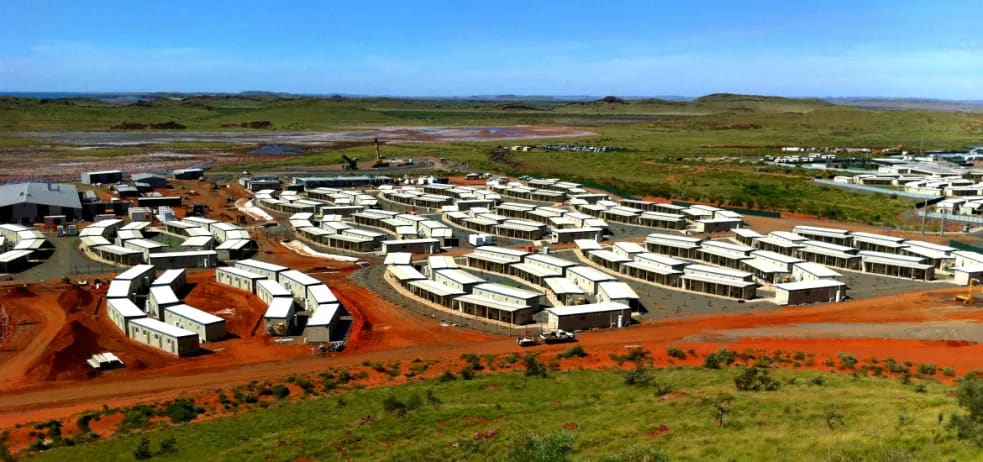
Mining camp planning is the engineering discipline of scoping, sizing, and laying out a remote-site workforce accommodation facility so it meets operator standards, regional compliance, and logistical constraints before a single donga leaves the factory. The output of a planning exercise is a camp-design package covering headcount model, amenity ratio schedule, services load, site plan, and a compliance matrix against Standards Australia and operator-specific benchmarks. Planning is distinct from procurement; procurement selects suppliers and places orders while planning defines what the camp needs to be. A camp scoped in isolation from the resource plan, rotation pattern, and operator standard will almost always trigger rework after deployment, which on SCS-deployed projects runs at roughly a six-times cost multiplier versus the design-stage fit-out (SCS Global project records, 2019 to 2026, anonymised). Running the planning exercise properly compresses commissioning timelines and removes the most common cause of operator-audit rework.
Guide
Mining Camp Planning: Layout, Amenity Ratios & Compliance
A planning walkthrough for remote mining camps, covering headcount sizing, amenity ratios, services load, layout, and compliance. Written for procurement, operations, and project leads scoping against operator standards.
Summary
Planning a remote mining camp starts with three numbers: headcount, rotation pattern, and roster length. From those, amenity ratios follow directly. SCS Global plans to 1 bed per roster worker, 1 shower per 4 beds, 1 toilet per 4 beds, 1.5 kitchen covers per bed per sitting, and 1 laundry machine per 20 beds, adjusted against operator-specific standards (BHP GLD-21, Rio Tinto, Fortescue). Services scale linearly from bed count: 250 L/day water, 15 kWh/day electrical, 200 L/day sewage. Layout follows service adjacency and egress constraints, not aesthetics. This guide sits alongside our mining camp accommodation pages at SCS Global, covering the product specifications and compliance documentation that support the same procurement audience.
Start from the resource plan: how many workers live on site during peak operation, and what proportion are rotating. A "200-person camp" typically means 200 simultaneous beds, sized against the operator standard the client is working to. Fly-in fly-out (FIFO) rotations generally assume 1.1 to 1.15 times beds to heads, which covers the transition days where outgoing and incoming crews overlap; drive-in drive-out (DIDO) operations usually run one-to-one. Add 5 to 10 per cent contingency beds to absorb visiting auditors, contractors, and short-term scope changes without forcing emergency accommodation orders. Bed count drives every downstream number: BHP GLD-21 and the Rio Tinto WA accommodation standard both size amenity schedules directly from the peak-rotation bed figure (BHP GLD-21 Accommodation Standard). Under-sizing is the most common mining-camp planning mistake, because remedial accommodation runs at roughly six times design-stage cost.
Under-sizing is the most common mining-camp planning mistake. Remedial accommodation runs at roughly six times design-stage cost.
Tier-1 mining operators publish amenity ratios that suppliers must meet, and an SCS planning package benchmarks the design against the highest-common-factor ratio across all named operators on the project. Typical targets are 1 shower per 4 beds, 1 toilet per 4 beds, 1 laundry machine per 20 beds, 1.5 kitchen covers per bed per sitting, and 1 mess seat per 2 beds. Over-supply is always cheaper than under-supply, because under-spec on amenity ratio is the single most common reason a camp design is returned for revision at operator audit. BHP GLD-21, Rio Tinto WA-Accom-STD, and Fortescue Metals Group drive the Australian benchmark, while MOM Singapore and FEDA UAE drive the equivalent across Southeast Asia and the Middle East. The standard also sets the upper bound on donga-to-ablution travel distance at 60 metres (BHP GLD-21 Accommodation Standard), which becomes the primary constraint on row length.
| Facility | Industry baseline | AS/NZS / operator reference | Tier-1 override |
|---|---|---|---|
| Showers | 1 per 4 beds | AS/NZS 3500 + BHP GLD-21 | 1 per 3 beds on 28-day roster |
| Toilets | 1 per 4 beds | AS/NZS 3500 | 1 per 3 beds (Rio Tinto WA) |
| Laundry machines | 1 per 20 beds | Operator convention | 1 per 15 beds (Fortescue) |
| Kitchen covers | 1.5 per bed per sitting | BHP GLD-21 | 2 per bed on 24-hour shift patterns |
| Mess seats | 1 per 2 beds (peak) | Operator convention | 1 per 1.5 beds on compressed rosters |
Every bed adds measurable services load. The industry-average planning numbers for a full-amenity rotation camp are 250 litres per bed per day of fresh water (Australian Mining Camp Utilities Report 2024), 15 kilowatt-hours per bed per day of electrical (AusIMM Energy Benchmarking 2023), and 200 litres per bed per day of sewage (Queensland Mining Sustainability Report 2024). A 200-bed camp therefore needs 50 kilolitres per day of water, 3 megawatt-hours per day of electrical with a peak draw around 250 kilowatts once kitchen and laundry load is included, and 40 kilolitres per day of sewage treatment. These numbers drive plant sizing, on-site storage, trucking schedule, and genset redundancy more than any other single planning decision. AS/NZS 3500 governs the plumbing systems that move water and sewage between bedrooms, kitchens, and the treatment plant, and is the reference any operator will audit against.
Plan donga rows no longer than 12 units to keep ablution-block travel distance under 60 metres, per the BHP GLD-21 operator benchmark (BHP GLD-21 Accommodation Standard). Keep mess and kitchen adjacent, because the mess is the highest-traffic building during service windows, and an inefficient kitchen-to-mess connection multiplies the labour hours required to run it. Separate the mess from sleeping zones by at least 50 metres to reduce noise transfer during night-shift sleeping hours. Emergency egress paths must be continuous, illuminated, and signposted as a state mining regulator requirement in most Australian jurisdictions, and explicit in MOM Singapore worker-accommodation code. Laundry, gym, and recreation buildings should cluster opposite the mess; separating them from sleeping zones prevents 24-hour traffic past bedroom dongas. Layout compliance tests egress distances, amenity ratios, accessibility, and service redundancy against the published operator standard.
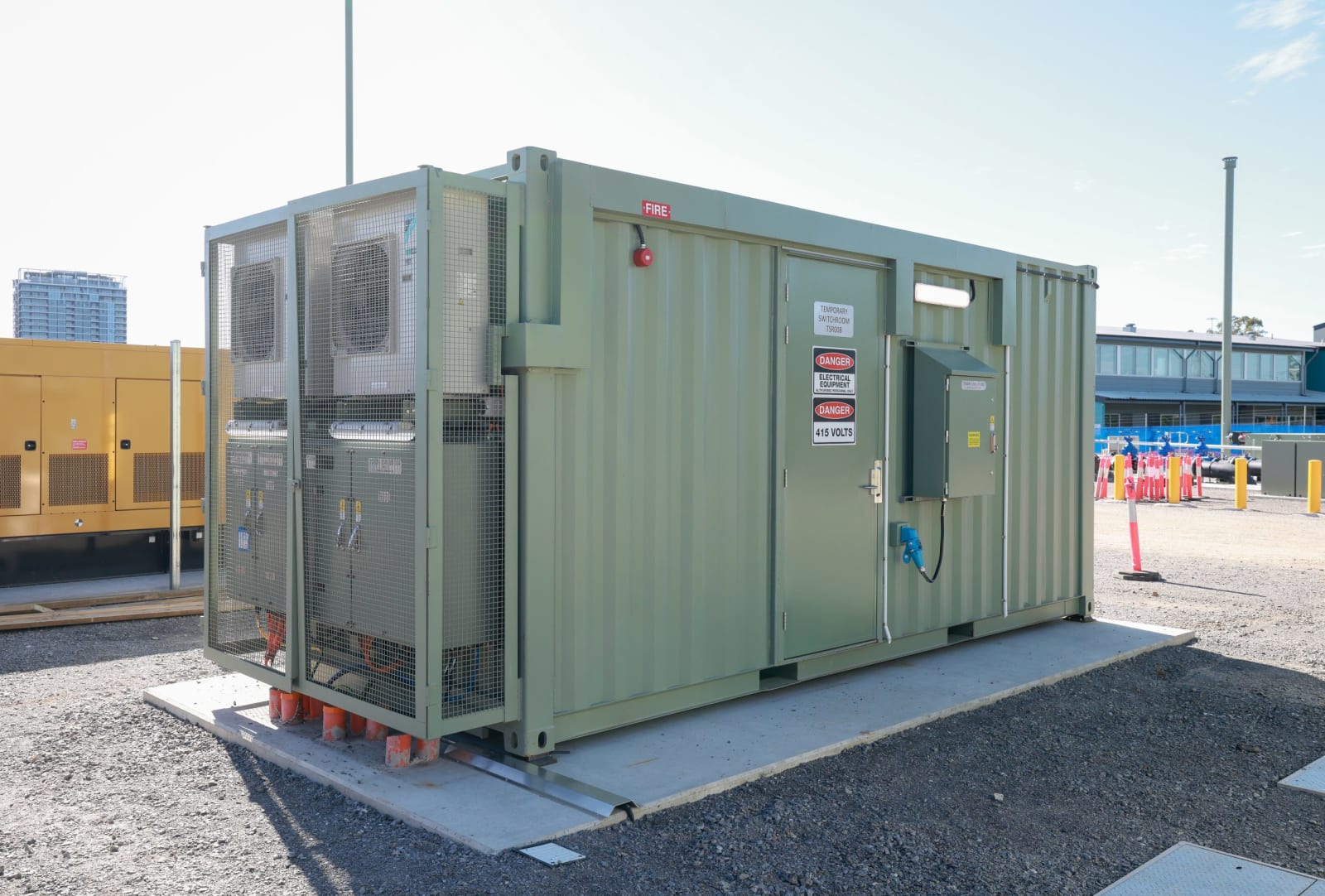
Compliance-ready means the camp can be presented to an operator auditor or state mining regulator without modification. Every donga carries a certification envelope: AS/NZS 3000 electrical, AS/NZS 3500 plumbing, regional cyclone rating where applicable (C1, C2, C3, or C4 per AS/NZS 1170.2), and the operator-specific accommodation standard (BHP GLD-21, Rio Tinto WA-Accom-STD, Fortescue, or regional equivalent). Layout compliance tests fire egress distances, amenity ratios, accessibility (DDA or equivalent), and service redundancy. A compliance-ready package also carries an operations handover pack covering services schematic, equipment schedule, maintenance intervals, and operator-training handover for kitchen, laundry, and water treatment plant. Missing handover documentation is the most common reason a camp commissioning date slips past plan, and the industry benchmark for rework on running-site scope changes is approximately six times design-stage fit-out cost (SCS Global project records, 2019 to 2026).
Planning engineer's 10-step checklist
- Confirm peak headcount, rotation pattern, and roster length with the client resource plan.
- Apply rotation multiplier (1.1 to 1.15x FIFO, 1:1 DIDO) and add 5 to 10 per cent contingency.
- Select operator standard (BHP GLD-21, Rio Tinto WA, Fortescue, MOM Singapore) and design to the highest common factor.
- Calculate amenity ratio schedule: showers, toilets, laundry, kitchen covers, mess seats.
- Size services: water (250 L/bed/day), electrical (15 kWh/bed/day), sewage (200 L/bed/day).
- Plot the site layout with donga row length at or below 12 units, ablution distance at or below 60 m, and mess adjacency enforced.
- Overlay egress paths, DDA-accessible routes, and emergency assembly points.
- Apply cyclone-zone / structural rating per AS/NZS 1170.2 for the deployment region.
- Schedule commissioning sequence: services first, dongas second, common-area buildings third.
- Prepare operator audit package: certs, spec sheets, services schematics, handover pack.
Standards & references
Regulations and operator standards
Every figure and ratio on this page traces to one of the standards below. Follow any link through to the source authority for the current revision.
Expert perspective
Planning lessons from 300+ deployed camps
“The hardest planning mistake to undo is under-sizing kitchen and mess capacity. Expanding a kitchen on a running camp means rerouting services around an active site, which costs roughly six times the original fit-out. Always round up on kitchen covers per bed, and always plan to the peak rotation week of the project, not the steady-state headcount. Two other lessons from SCS-deployed projects: build in spare donga capacity at 5 per cent of peak headcount to absorb visiting auditors and scope changes without triggering an emergency accommodation run; and always commission water storage and sewage treatment at 1.25x the planning load, because planning-averages are averages, and every camp has a peak day that breaks them.”
Related pages
More guides and products
More from our mining camp accommodation pages: additional guides that deepen the planning picture, plus the commercial starting point when you are ready to scope a specific unit.
Dongas (Single-Person Units)
Take what this guide covers and apply it to a named product. Dongas are the base unit that every planning number above is expressed in.
Read more
Mining Camp Compliance Guide
AS/NZS standards, cyclone ratings, MOM and labour-camp regulations by region.
Read more
Ablution Blocks
Shower, toilet, and basin facilities sized to the ratios in this guide.
Read more
Continue reading
Related guides
More guides across the SCS Global site covering compliance, manufacturing, and remote-site logistics.
Mining Camp Compliance Guide
AS/NZS standards, cyclone ratings, MOM and labour-camp regulations by region.
Read moreManufacturing & Quality Assurance
How dongas and camp modules are built at the SCS Yixing factory.
Read moreGlobal Delivery to Your Site
Logistics planning for camps where the nearest sealed road is hundreds of kilometres away.
Read moreNext step
Still scoping the camp? Talk to an engineer.
Bring a rough headcount, a rotation pattern, and a destination. Our engineering team will run the ratios, the services load, and the compliance matrix against the operator standard you are working to, and return a planning-stage package you can take to procurement.