
Case Study · Gas Processing

Saudi Gas Plant Chemical Store: Class 8 Corrosive and DG Containers

Corrosive and chemical stores with compliant segregation, spill containment, and Gulf corrosion rating, signed off on first inspection

Results snapshot

Corrosive and chemical stores with compliant segregation, spill containment, and Gulf corrosion rating, signed off on first inspection

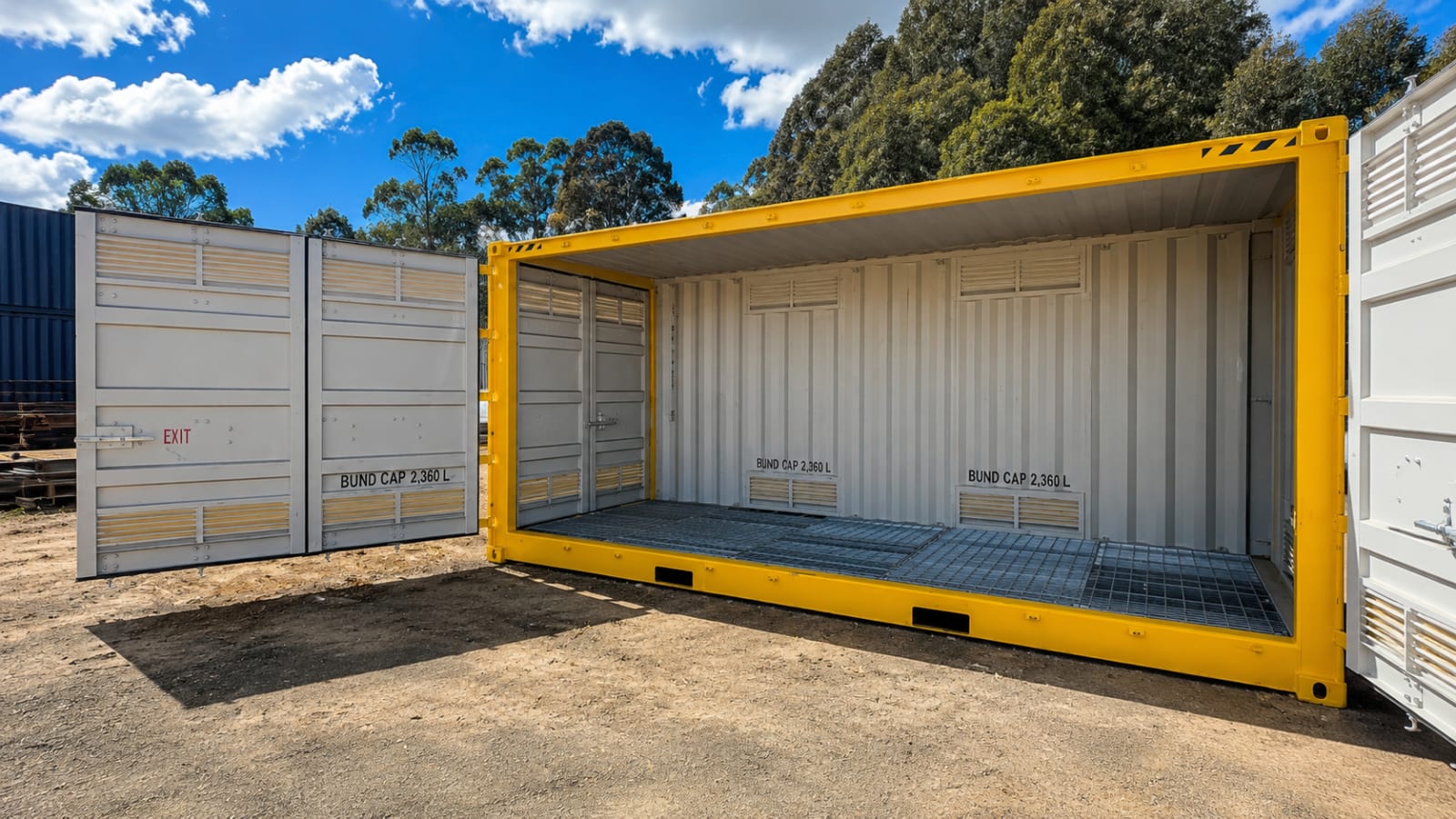
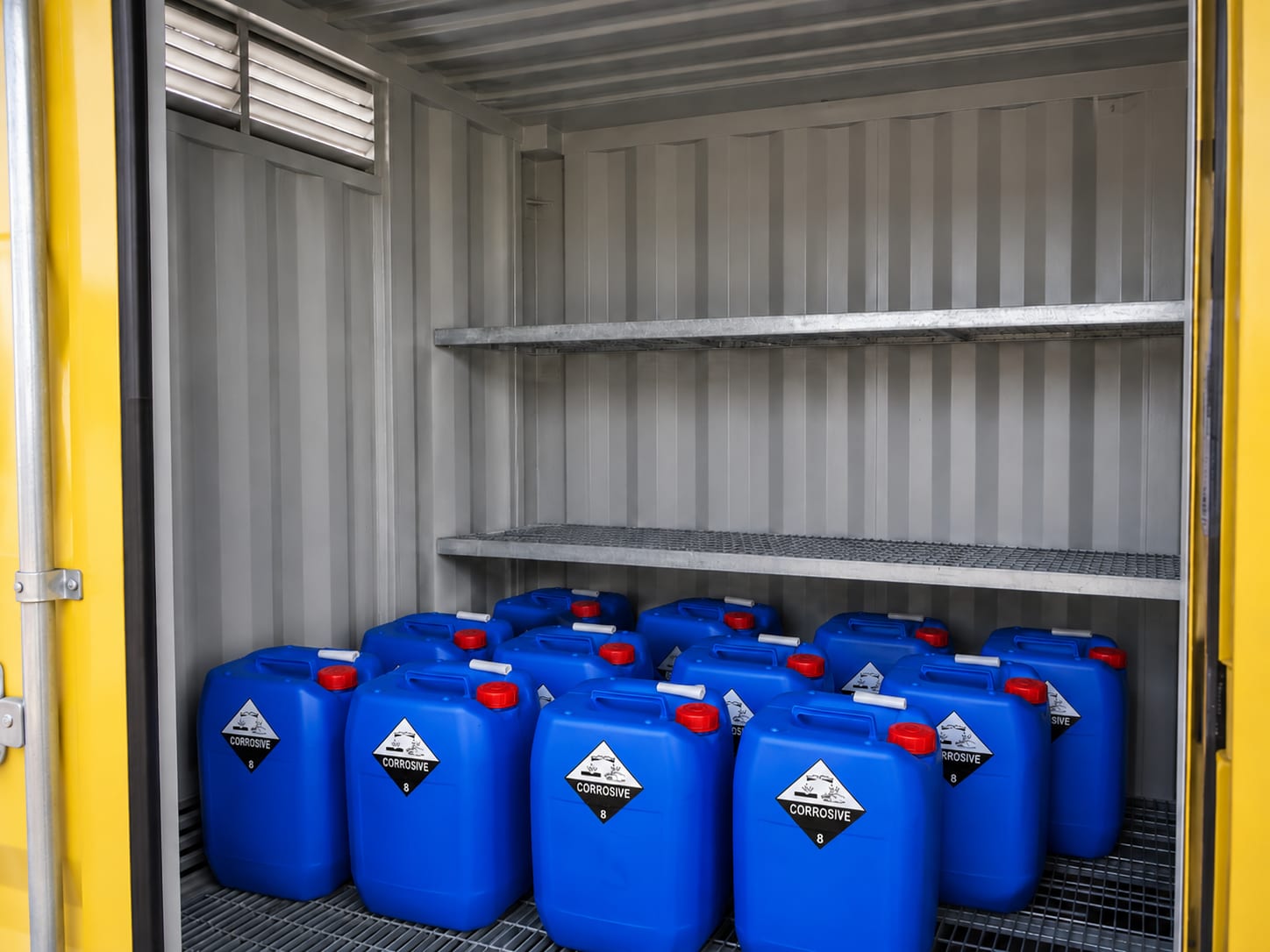
SCS Global delivered a chemical storage compound to a gas processing operator in Saudi Arabia, combining corrosive stores for Class 8 substances with chemical storage containers for the plant's wider reagent inventory. Every unit was built with chemical-resistant bunding sized for spill containment, calculated ventilation, IEC 60364 electrical with hazardous-area provisions to IECEx where required, and a placarding and segregation schedule referenced to the operator's hazardous-materials standard and the IMDG and UN class system. The enclosures were corrosion- rated for the Gulf's high-ambient, high-salinity environment. The compound was laid out so incompatible classes were segregated by design, and it was signed off on the first inspection, delivered on one compliance envelope from a single manufacturer. This project sits inside our dangerous goods containers hub at SCS Global.

Project narrative

How the project ran

Three stages: the problem the operator brought, the engineering calls SCS made, and the outcome the day after commissioning.

Challenge

The challenge: a mixed chemical inventory stored to code, with classes segregated, in the Gulf

A gas processing operator in Saudi Arabia needed a chemical storage compound for a mixed inventory: Class 8 corrosives alongside other reagents. Corrosive storage and the wider inventory each carry their own segregation requirements, and the hard part is segregation: incompatible classes cannot share a containment system, so the compound had to be laid out so a spill in one store could not reach an incompatible class. On top of that, the Gulf's high-ambient heat and high salinity attack a store that is not engineered for it. On a processing plant, a store that fails inspection sits on the safety case and the environmental approvals.
Action

The action: corrosive stores and chemical stores, segregated by design and rated for the Gulf

SCS built the compound from two configurations: corrosive storage for the Class 8 substances and chemical storage for the wider inventory. Each store had chemical-resistant bunding sized for spill containment, ventilation calculated for its contents, IEC 60364 electrical with hazardous-area provisions where the classification required, and a placarding schedule to the operator's hazardous-materials standard and the IMDG and UN class system. The enclosures were corrosion-coated for the Gulf environment. The layout was the engineering: incompatible classes sat on separate containment with the required segregation distances. Built to the QA in our manufacturing process, each store shipped with its compliance pack and was positioned to the segregation layout on site.

Result

The result: signed off on first inspection, evidenced against the safety case

The compound was signed off on the first inspection, entered against the plant's DG register and safety case on the strength of the factory compliance packs. Because segregation was engineered into the layout rather than negotiated at inspection, there were no remediation lots and no repositioning after delivery. The chemical-resistant bunding and calculated ventilation matched each store to its contents rather than a generic rating, and the corrosion system was specified for the Gulf rather than retrofitted. The result is a containment system that is defensible on the safety case, delivered on one compliance envelope.

Outcomes

Quantifiable transformation

Before, after, and the delta against the project deliverables that SCS and the operator tracked.

First-inspection sign-off

Before
Target: first pass
After
Signed off first inspection
Delta
Met

Class segregation

Before
IMDG/UN segregation
After
Engineered into layout
Delta
Compliant

Spill containment

Before
Chemical-resistant bunding
After
Sized to contents
Delta
Met

On-site repositioning

Before
Tolerance: 0
After
0
Delta
0

Next step

Want a similar outcome? Talk to engineering.

Bring the substance, the volume, the jurisdiction, and the operator standard. Our engineering team will walk through the engineering and compliance pathway against your scenario and return a factory documentation pack you can take to procurement.