Case Study · Gold Mining

WA Goldfields Fuel Farm: 6 x 20ft AS 1940 Bunded Diesel Stores

Six AS 1940 bunded diesel stores that passed the WA dangerous-goods inspection on first attempt

Results snapshot

Six AS 1940 bunded diesel stores that passed the WA dangerous-goods inspection on first attempt

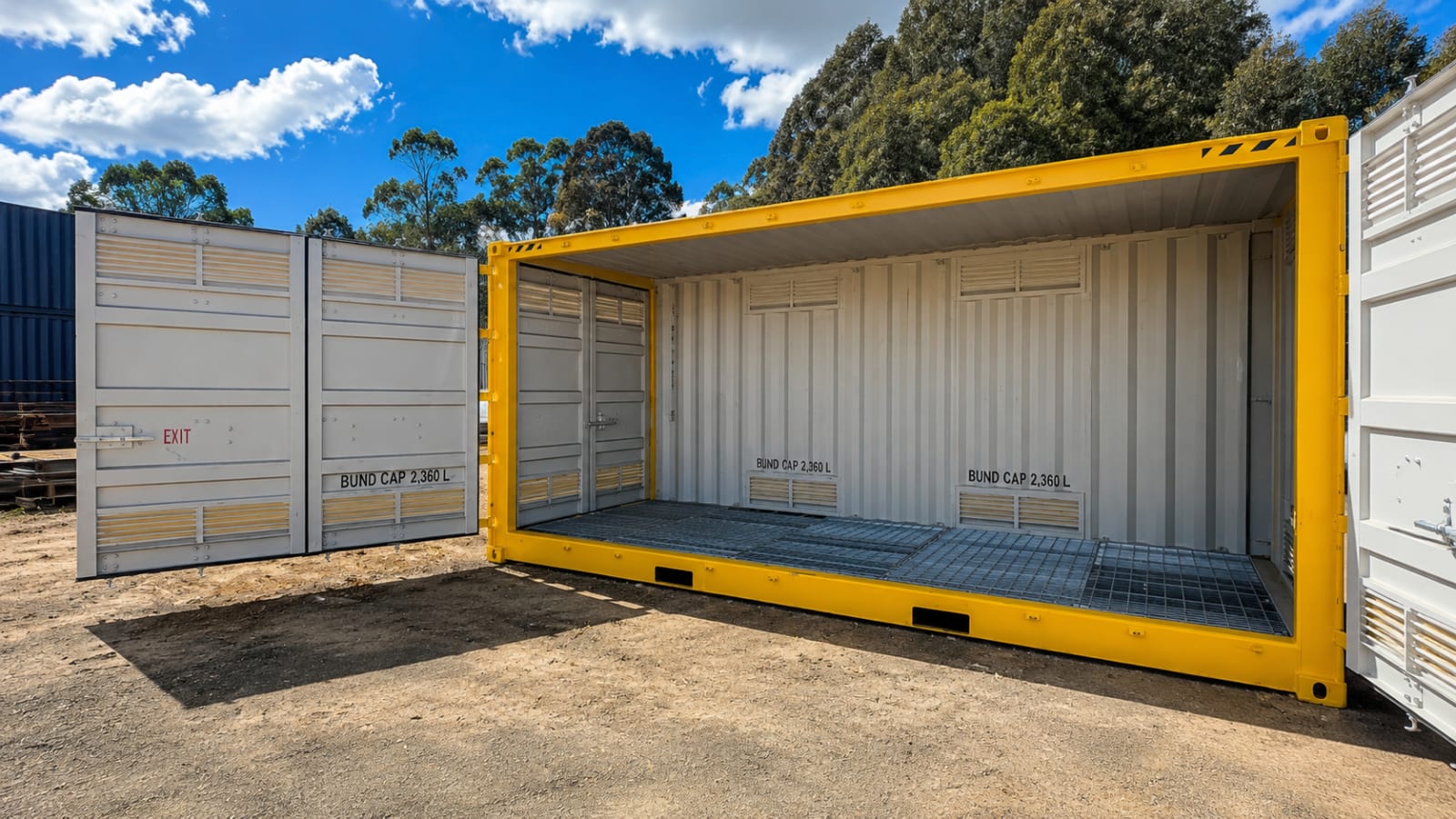
SCS Global delivered six 20ft AS 1940 bunded diesel storage containers to a gold operation in the Western Australian Goldfields for a remote fuel farm. Every unit was built to AS 1940:2017 with a 110 per cent bund, calculated ventilation, AS/NZS 3000 electrical with a stamped hazardous-area drawing, and a dangerous-goods placarding schedule, and each shipped with a project compliance pack. The compound passed the WA dangerous-goods inspection on the first attempt, and the operating permit issued on schedule. The order, six units on one compliance envelope, is the kind of mid-sized order SCS is built for. This project sits inside our dangerous goods containers hub at SCS Global.

Project narrative

How the project ran

Three stages: the problem the operator brought, the engineering calls SCS made, and the outcome the day after commissioning.

Challenge

The challenge: a fuel farm that passes the dangerous-goods inspection on first attempt

A gold operation in the WA Goldfields needed a remote fuel farm of six 20ft diesel stores, sized for its rotation cycle, that would pass the WA dangerous-goods inspection on the first audit. The standard was AS 1940:2017, layered against the operation's procurement requirements. A failed inspection holds the fuel facility's operating permit, pushes commissioning past cut-over, and triggers contractor stand-down. Every container also had to arrive with a stamped compliance pack so it could go onto the site DG register without further engineering review.

Action

The action: factory-compliant build with a stamped compliance pack per unit

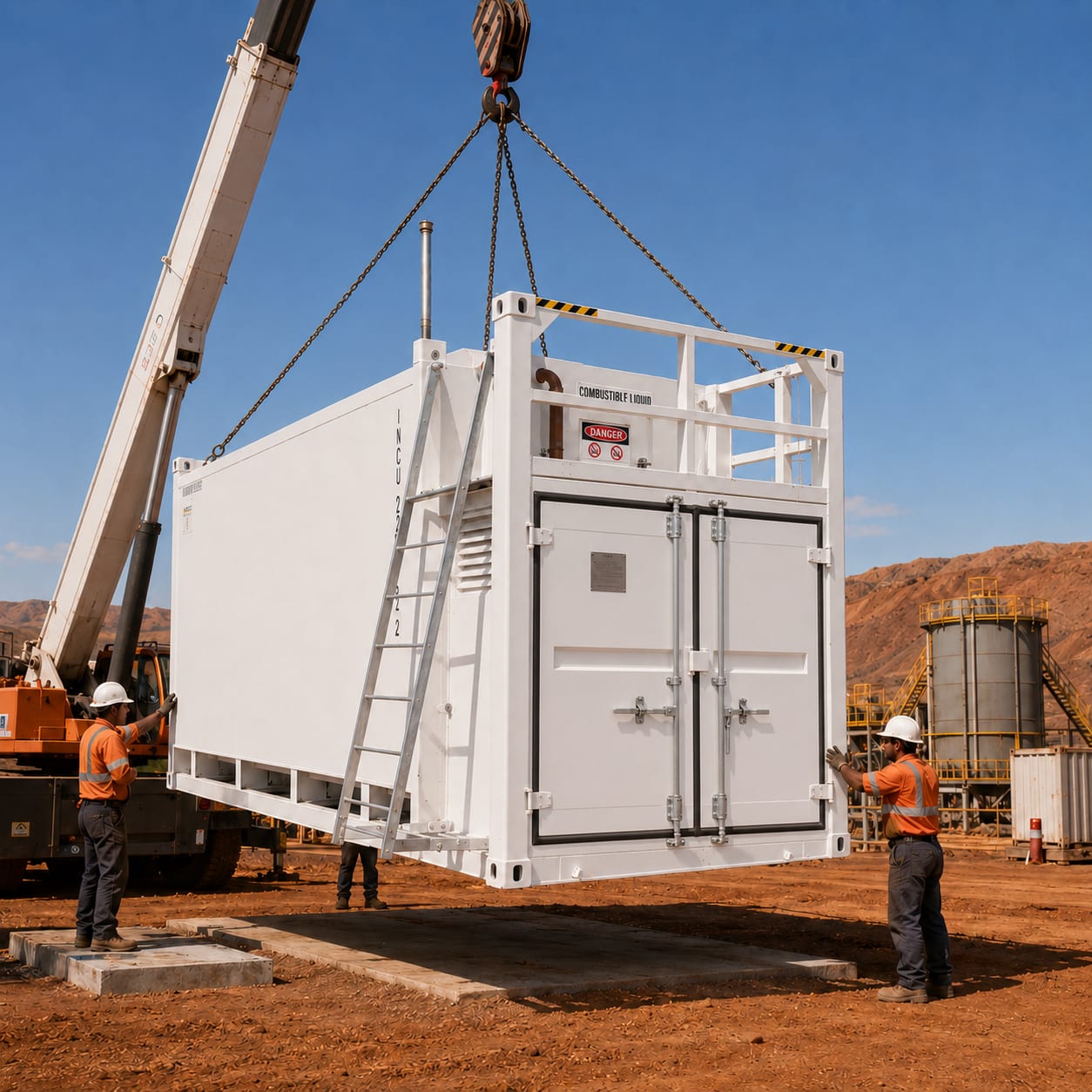
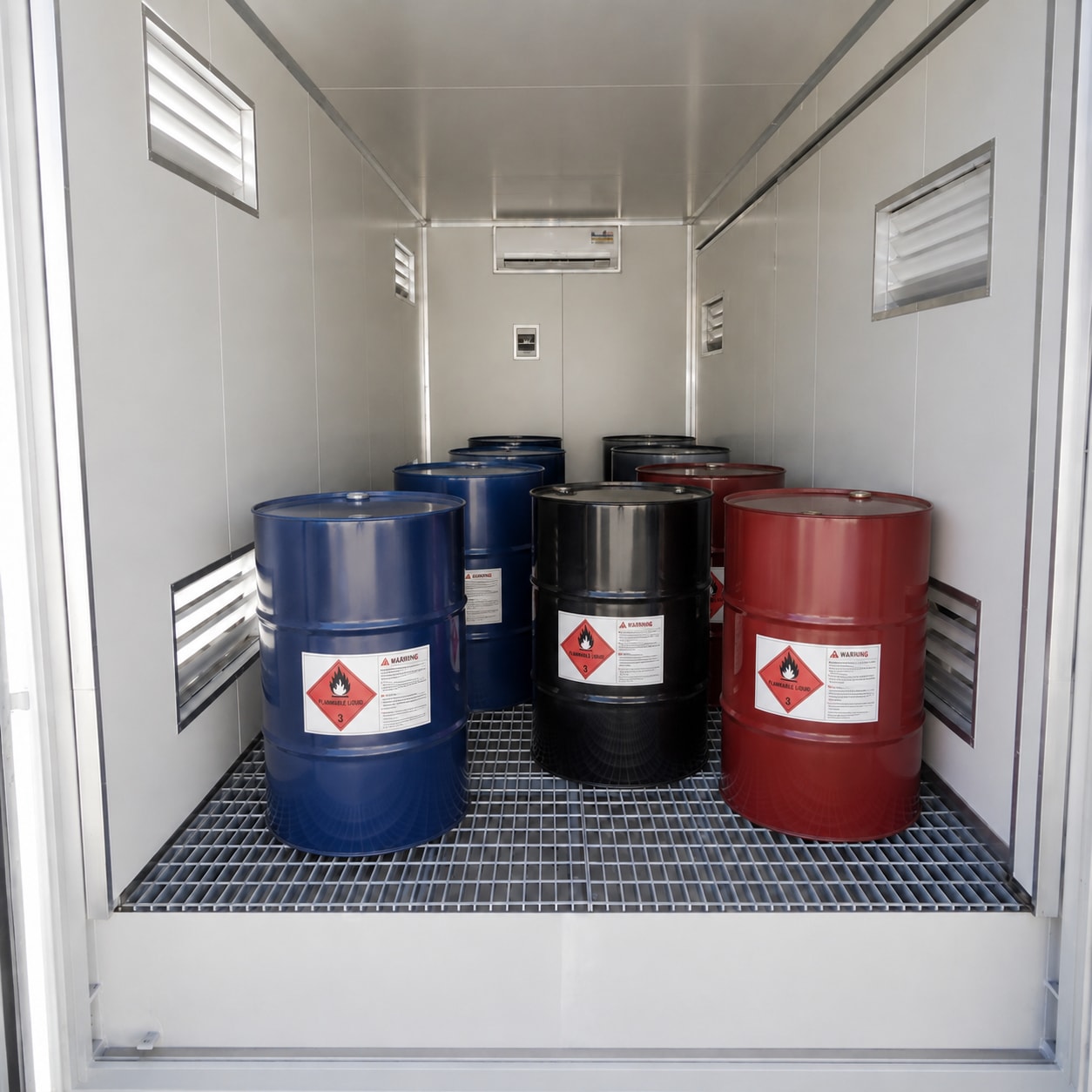
SCS engineered each unit to AS 1940:2017, drawing on our 20ft dangerous-goods containers and flammable-liquid storage for Class 3 diesel. Each had a 110 per cent bund, calculated ventilation, AS/NZS 3000 electrical with a stamped hazardous-area drawing, and a placarding schedule to the ADG Code, and shipped with a project compliance pack. The layout handled safe dispensing, ignition control, and spill containment. Built to the QA in our manufacturing process, the units were consolidated to one shipment and craned onto the prepared pad.

Result

The result: first-inspection pass, operating permit issued on schedule

All six units passed the WA dangerous-goods inspection on the first attempt, and the operating permit issued on schedule. There were no remediation lots, no on-site retrofit, and no permit hold-points, and capex tracked to budget with no field-rework variation. Because the AS 1940 baseline had been reconciled against the operator overlay before the first cut, the inspection was a single audit pass. Procurement got regulator-defensibility on day one, operations got zero permit delay, and the operation added the pack to its standing reference.

Outcomes

Quantifiable transformation

Before, after, and the delta against the project deliverables that SCS and the operator tracked.

WA DG first-inspection pass

Before
Target: 100%
After
6/6 units
Delta
100%

Operating permit delay

Before
Target: 0 days
After
0 days
Delta
0 d

On-site retrofit lots

Before
Tolerance: 0
After
0
Delta
0

Capex vs procurement budget

Before
Budget baseline
After
Tracked to budget
Delta
No variation

Next step

Want a similar outcome? Talk to engineering.

Bring the substance, the volume, the jurisdiction, and the operator standard. Our engineering team will walk through the engineering and compliance pathway against your scenario and return a factory documentation pack you can take to procurement.